Our Society
about us
The Williamstown Historical Society Inc. was established in 1956 to collect, record, preserve and promote our local community history. A museum opened in 1963 in the Williamstown Mechanics Institute building.
In 2026, we celebrate 70 years of operations.
Our society
We are a member-driven organization, operating on a non-profit basis and overseen by a dedicated committee. Our volunteers play a vital role in conducting research, archiving and preserving a growing collection.
The collection includes photographs, documents, and artefacts from the 1800s to the present day, as well as published works related to the town’s history.
Williamstown was established as a “government town” with Immigration, pilots, customs, water police, tugboats, boat-building and shipbuilding, Ports and Harbour yard, Astronomical Observatory, Railway workshops, Victorian Navy, Militia, Artillery, Rifle Range along with iron foundries, petroleum facilities, S.E.C. power station, etc.
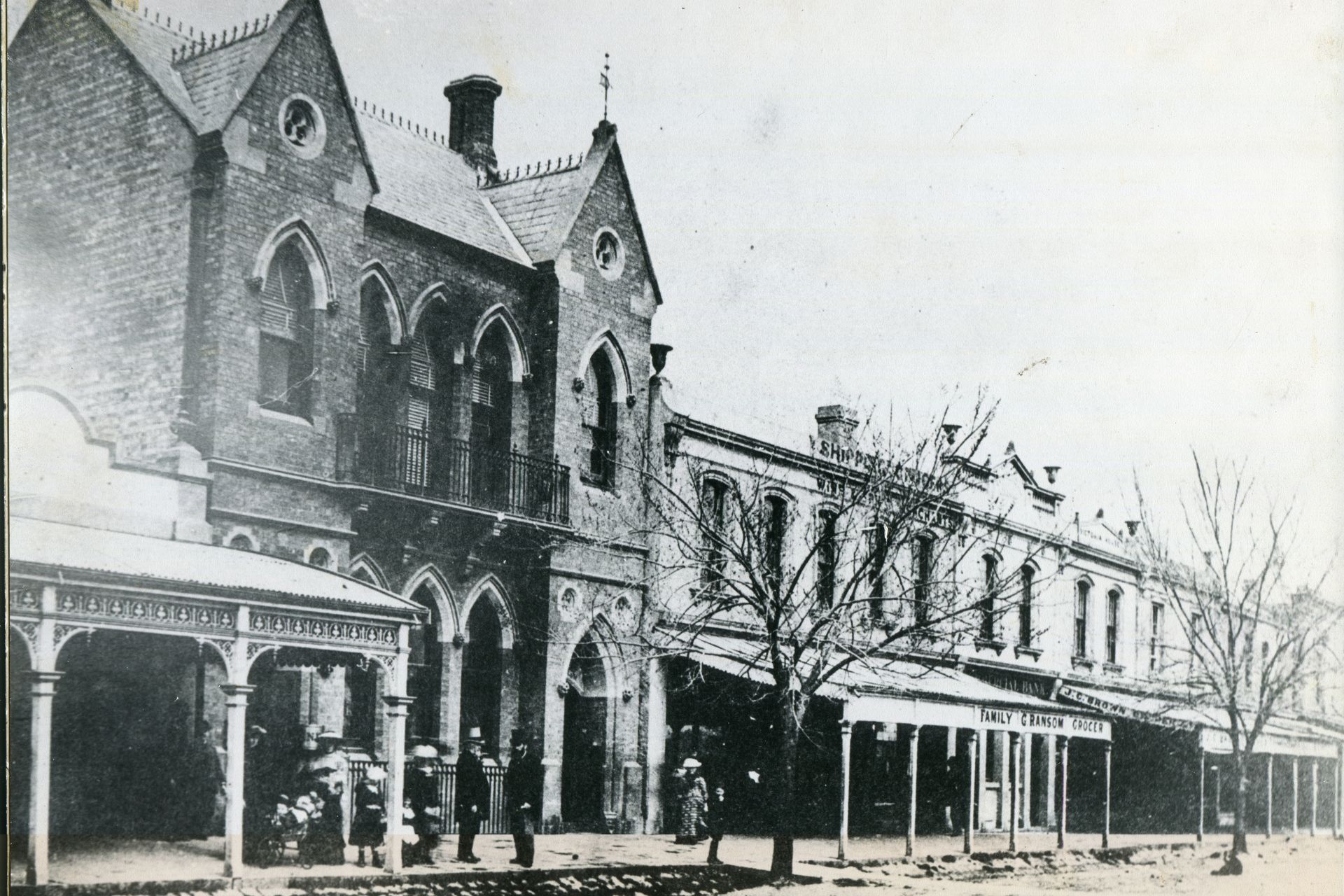
Travellers to Williamstown have long been attracted to the diverse collection of historically significant buildings in the area. The local papers reported visits by many groups from the Royal Historical Society of Victoria over the years, which contributed to the formation of a society to act as the custodian of local history.
Current committee 2026/27
President:
Russell Brown
Vice President:
Stacey Williams
Secretary:
Ian Miller
Treasurer:
Colleen Miller
Committee Members:
Janet Long,
Steven Webb, Rick Sidgwick, Nicole Harris, Laurie Treadwell, John Mylonas
Life Members
These members have been recognized for their dedication and contribution as volunteers and custodians in keeping the Williamstown Historical Society Collections and Museum open. Thank you for preserving and sharing our community's history through your tireless commitment and vision.
- Ada ACKERLY
- Alan BARDIN (d)
- Nola BARDIN (d)
- Dorothy BIRCH
- Ray BIRCH (d)
- Loren BOYD (d)
- Maurice BOYD (d)
- Rex DUNSTAN (d)
- Arch FERGUSON MBE (d)
- Janet FERRIS
- Tom FERRIS
- Maureen GIBBS
- Cliff GIBSON (d)
- Alan GITTINS (d)
- Irene GITTINS (d)
- Phyllis HALL (d)
- Arthur HALNON (d)
- Brian HAYNES
- Betty JAMIESON (d)
- Pat KLEMM
- Arthur LIEBERT
- Janet LONG
- Halden McLEOD (d)
- Geoff MALLETT (d)
- Jennie MOLONEY
- Alan MOORIN (d)
- Phyllis MURPHY (d)
- William MURTON (d)
- Helen PENROSE
- Ian RAE
- Joan RAE (d)
- Helen RAISKUMS
- George RIDLEY (d)
- Joan RIDLEY (d)
- Dale RYAN
- Lois SWABY (d)
- Fred THOMAS OAM (d)
- Kate WATSON
- Howard WHITTAKER OAM (d)
- Pauline WHITTAKER (d)
- Peter WILLIAMS OAM
Mission Statement
The Williamstown Historical Society and Museum aims to preserve the local area's history for future generations through collecting, identifying, studying, classifying, documenting, preserving, exhibiting, and interpreting historically significant objects and documents.
Our aim is to grow the membership and to work with other like-minded local organisations, the Hobsons Bay City Council and other external stakeholders.
The museum (currently closed) is a source of knowledge, ideas, stories and memories. It has been developed and managed as a community resource to inspire, educate and inform the community and visitors alike and contribute to the conservation of the history and heritage of the district.
Our history
The idea of establishing a local historical society and a small museum was first discussed in the 'Williamstown Advertiser' on 24th October 1936. However, it took another 20 years to realize this idea.
The inaugural meeting of the Historical Society of Williamstown was held on 13th July 1956 in the Mechanics Institute. The Williamstown Council requested a local historical society be formed and affiliated with the Royal Historical Society. The Williamstown Arts Council organised the meeting and a general invitation was extended to anyone interested. The guest speaker was the President of the Royal Historical Society, Mr G.R Leggett.
From The Williamstown Advertiser, 3 August, 1956
'At a meeting of the Historical Society of Williamstown on 26th July, the discussion turned to the evergreen question – Where to erect the time ball? As a site most appropriate the Society favours The Strand in the vicinity of the Cenotaph.
Part of the Society’s programme is to collect and record all facts relating to the past in this city, and owing to the wide range of Williamstown’s history, sub-committees were formed. Marine research will be in the capable hands of Captains H. Watson, Molyneux and A. Goodale, while personal histories will painstakingly be followed by Mrs. S. Donaldson, Miss M. Philip and Mrs. J. Wallace. Residents can help by writing what is known about such subjects as: Old Identities and Families, Churches, Ships, Old Buildings, Street-Names, and Notable Happenings. Write a story and send it to the Society. Membership is now open to all interested. Fees are 5/- per annum, with no joining fee. Contributors of articles, etc., are asked to address them to Mr. J. H. Davey, Hon. Secretary'
The inaugural committee comprised Captain Hartley R. Watson, Cr. W.L Floyd, Mr A.J. Fowler, Mr J.H Davey, Mr J.A Harland, Captain G.A. Molyneux, Captain A. Goodale, Mr H. Morwick, Mrs S.A.S Donaldson, Mrs C Lindsay, Mrs W James, Miss M.L. Philip, Miss J.G. Wallace, Mr W. Evans.
A museum
From Williamstown Chronicle, 16 November 1961
'Council has agreed to set up the upper rooms of the Mechanics Institute for an exhibition of historical items. Following a deputation from members of Williamstown Historical Society at a meeting of the Public Works and General Purposes Committee recently, Council last Monday decided to grant the use of the upper rooms of the Mechanics Institute for exhibition of historical items. It is hoped that by setting up such a permanent exhibition along the lines of a folk museum to stimulate the handing over to the custody of the Society items of historical value for preservation.
Cr. Floyd introduced the deputation consisting of Mr. W. Evans (hon. Secretary), Mrs. Donaldson, Miss Hall, Messrs H. Morwick and A. W. Hick. Mr. Evans stressed the need for a permanent museum for the display, safe storage and preservation of historical items.'
The museum and historical society operated successfully for many years in the Mechanics Institute until significant restoration work was urgently required to repair the building in 2018. The museum artefacts are currently in long-term storage until a suitable new space is found to host the extensive collection or repairs to the Mechanics Institute can be undertaken. The Historical Society is still operating however in a reduced capacity.
Honour Board
Our Virtual Honour Board recognises those members who have held Executive Positions on the Committee and volunteered their time for the benefit of future generations. Without their commitment, dedication and vision, our organisation and the collection we are custodians of would simply not exist.
Presidents
1956 - 1961 Captain. Hartley Watson
1961 - 1962 William L. Floyd, OBE, JP
1962 - 1963 James (Jim) H.D. Davey
1963 - 1969 Harry A. Willian, MBE, VRD
1969 - 1970 James A. Ferguson, MBE
1970 - 1991 Howard Whittaker, OAM, JP
1991 - 2010 Joan Ridley
2010 - 2016 Janet Long
2016 - 2018 Brian Haynes
2018 - 2023 Janet Long
2023 - Russell Brown
Secretaries
1956 - 1961 James H.D. Davey
1961 - 1962 Wilson P. Evans
1962 - 1963 Phyllis L. Hall
1963 - 1978 Winifred Stewart
1978 - 1986 William C. Murton
1987 - 1988 Pauline Whittaker
1988 - 2005 Lois Swaby
2005 - 2007 Meg Schneider
2007 - 2010 Helen Penrose
2010 - 2014 Ada Ackerley
2014 - 2017 Dorothy Small
2017 - 2021 Kate Watson
2021 - 2024 Jenny Moloney
2024 - Ian Miller
Treasurers
1956 - 1967 J.A. Hartland
1967 - 1975 R. Salt
1975 - 1976 Murray Smith
1976 - 1978 Robert Hawdon
1978 - 1990 Halden McLeod
1990 - 2014 Fred Thomas, OAM
2014 - 2024 Maurice Boyd
2024 - Colleen Miller
Blogs