Events
history themed
What's on in our community? Our regular history presentations with guest speakers and wider community heritage and history-related events.
Our history presentations
We warmly welcome anyone (including members of the public) interested in history to our regular history presentations by guest speakers, who share their stories and passion for our history.
Previous events
May 2026
Shadows by the Sea, presented by Brian Haynes
We were please to have past President of the Historical Society, Brian Haynes present his 'Ghost' talk for May. Whilst Brian delivered an entertaining and light-hearted insight into things that go 'bump' in the night, he also shared his vast knowledge on Williamstowns unique history and buildings. Thanks Brian.
March 2026
Never give in and never give up. The literary life of Kate Baker O.B.E., presented by Mary Nelson
This talk explored the literary life of Kate Baker, her connections with the Melbourne literary bohemia, the Furphy circle, Miles Franklin, Mary Gilmore and others, and her lifelong mission to promote Australian literature to the world. Mary also enlightened us with the story of her portrait—painted when she was 88—which has remained in the vault of the Pennsylvania State University Library for more than sixty-five years, and outlined plans to repatriate it to Australia in partnership with the State Library of Victoria.
Marys talk also touched on the Baker family’s arrival in Williamstown in 1870 and their involvement in the town’s thriving community.
Thank you Mary, for sharing your family's story and highlighting the contribution of women to Australian literature and we look forward to hearing more on your quest to have Kate's portrait returned to Melbourne.
Steamrail Victoria - Newport Workshops Open Weekend
Our dedicated team of volunteers staffed our exhibit in the historic Clock Tower building over the March long weekend. We were fortunate to have been allocated the original storekeeper's office within the Clock Tower, one of the many spaces in the tower that the Hobsons Bay Mens Shed volunteers have been meticulously restoring over the past few years. A remarkable number of train aficionados experienced an ideal weekend filled with trains—from the mightiest locomotives to the tiniest models, alongside steam rollers, classic cars, music, and even delightful afternoon teas of scones in the Royal Carriages. The gardens, also rejuvenated by volunteers, looked splendid, providing a lovely backdrop for many families to enjoy a meal as they recharged for further adventures, while some tried their hand at Trugo, which was invented in the Newport Workshops in the 1920's (keep scrolling to find out more about Trugo).
January 2026
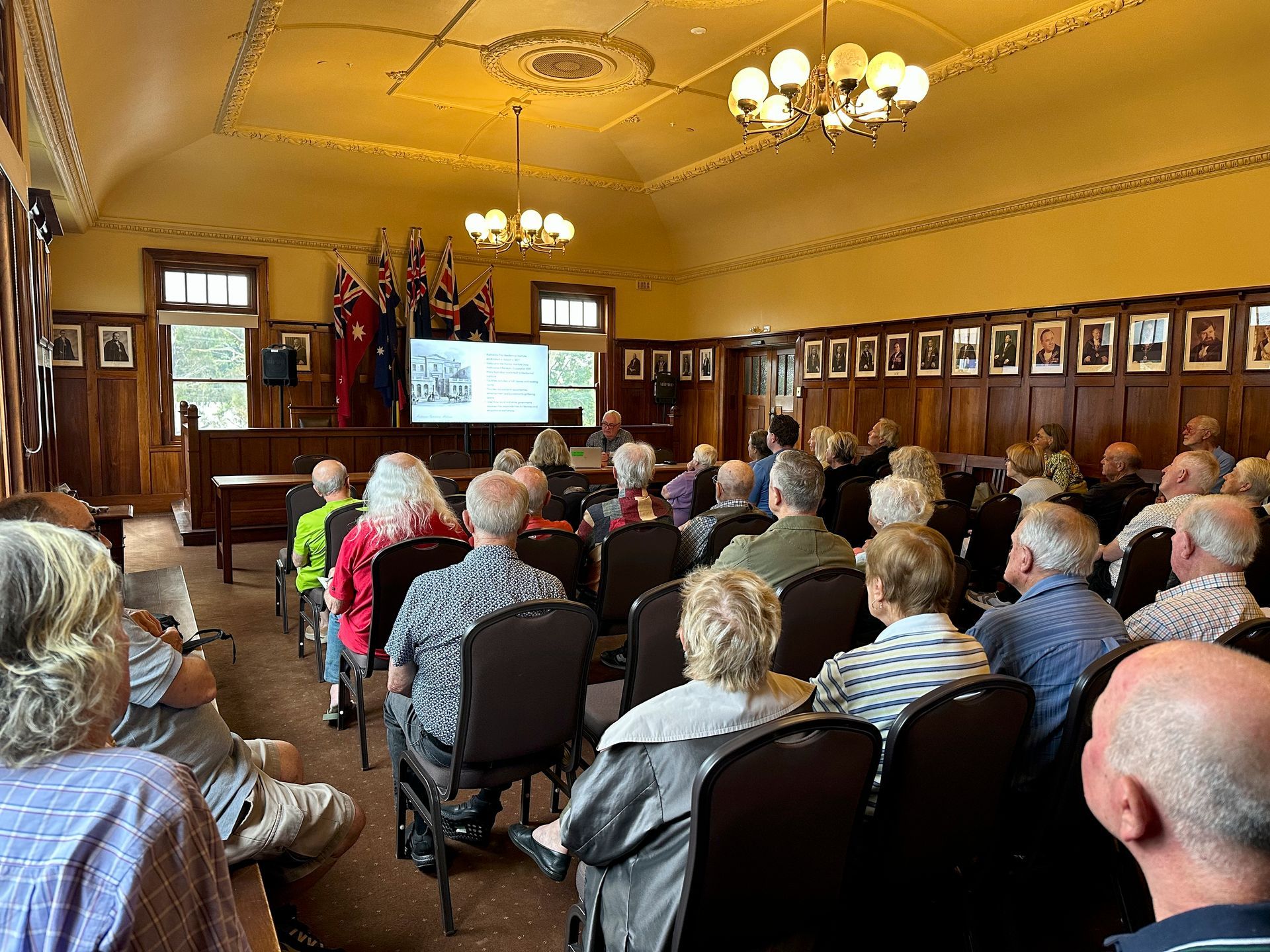
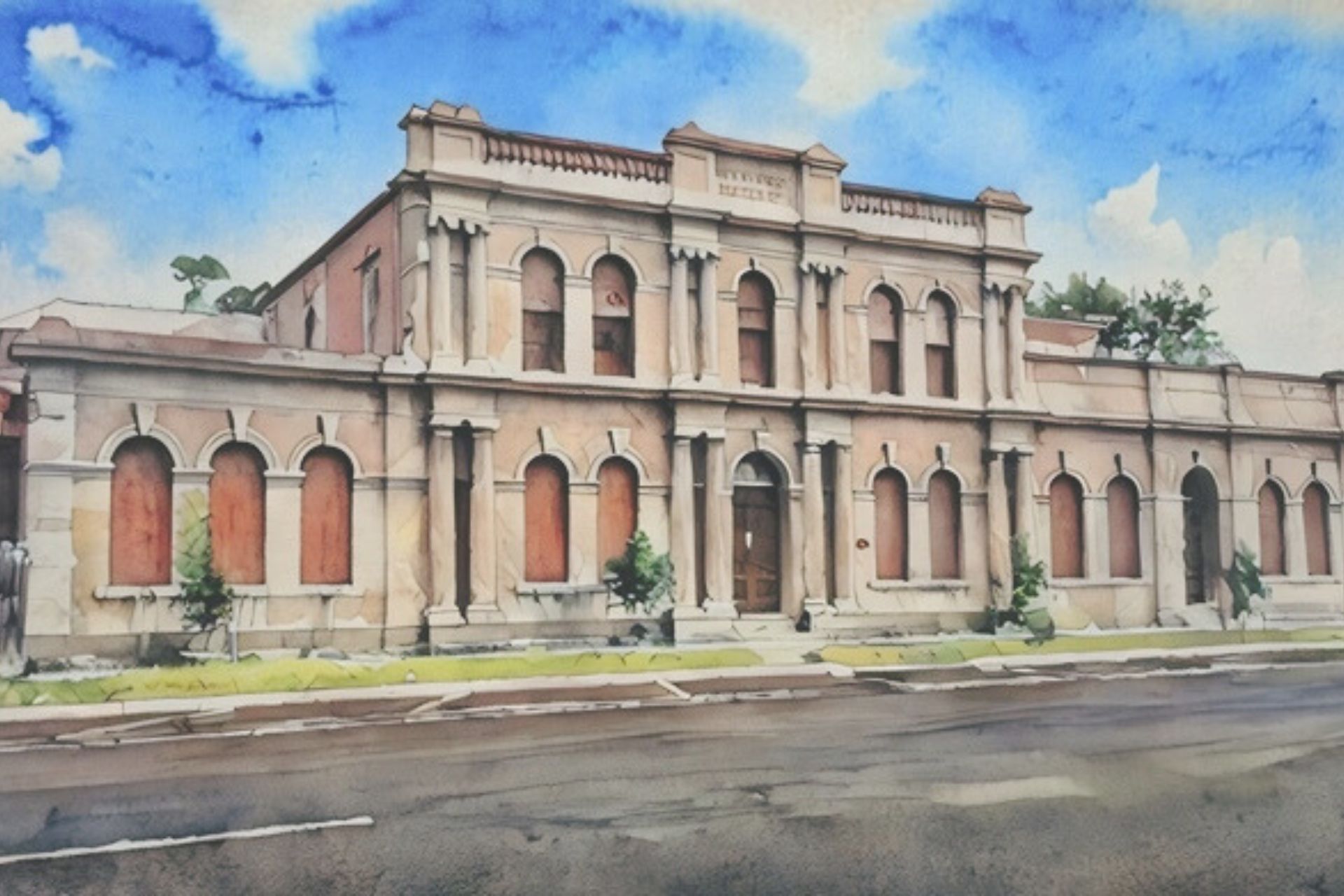
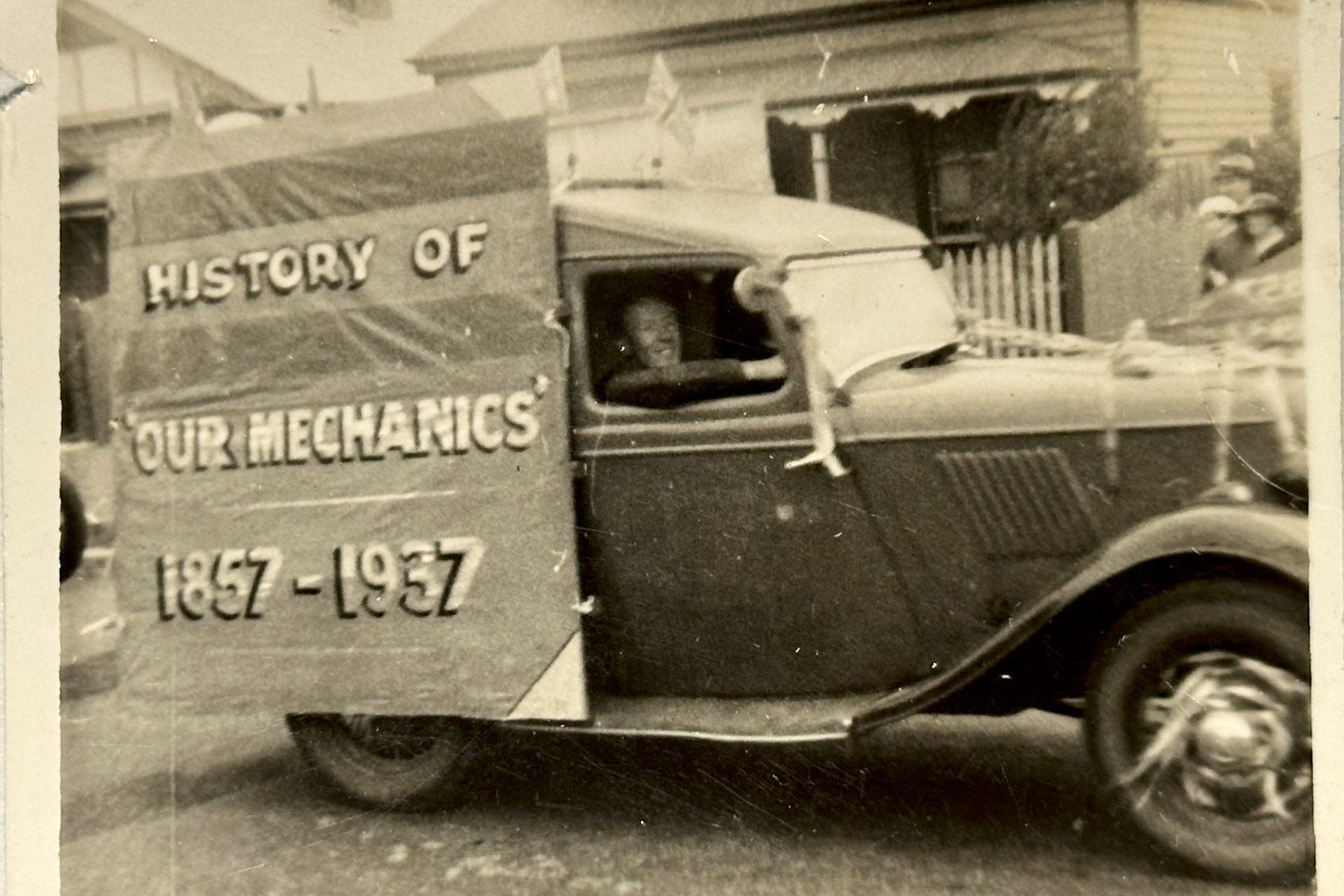
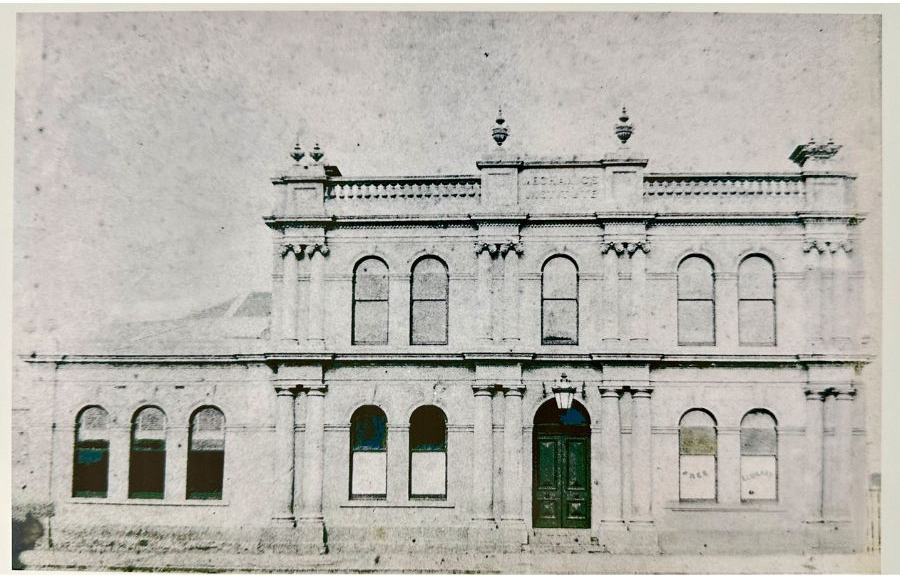
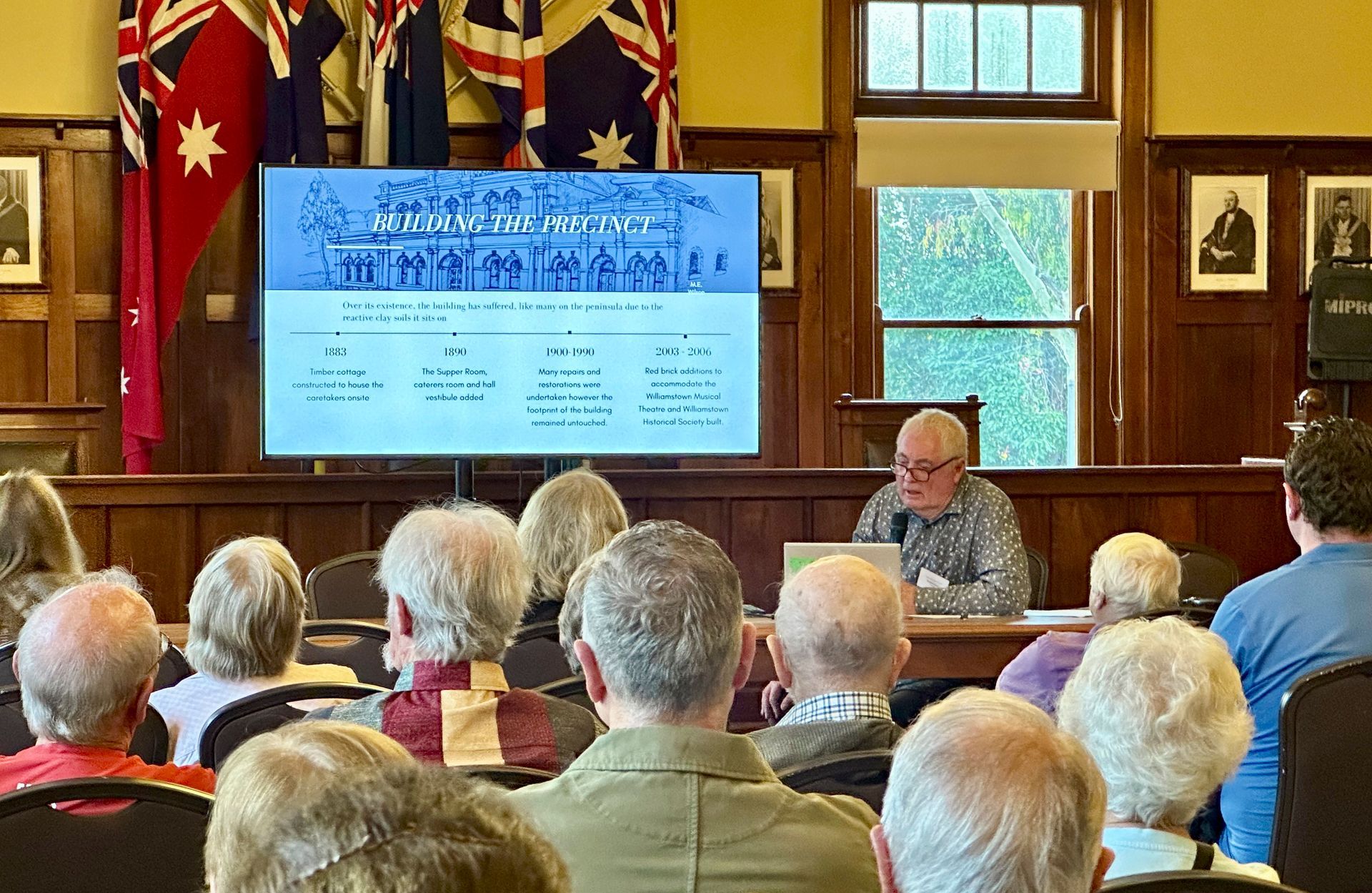
History of the Williamstown Mechanics Institute, presented by Russell Brown, President of the Williamstown Historical Society.
Founded in 1856, the Williamstown Mechanics’ Institute was established to promote education and self improvement in the growing township. It provided lectures, classes, and access to books and newspapers, becoming a key centre for learning and community life. The Institute’s building hosted a range of cultural and civic activities and played an important role in Williamstown’s educational and cultural development.
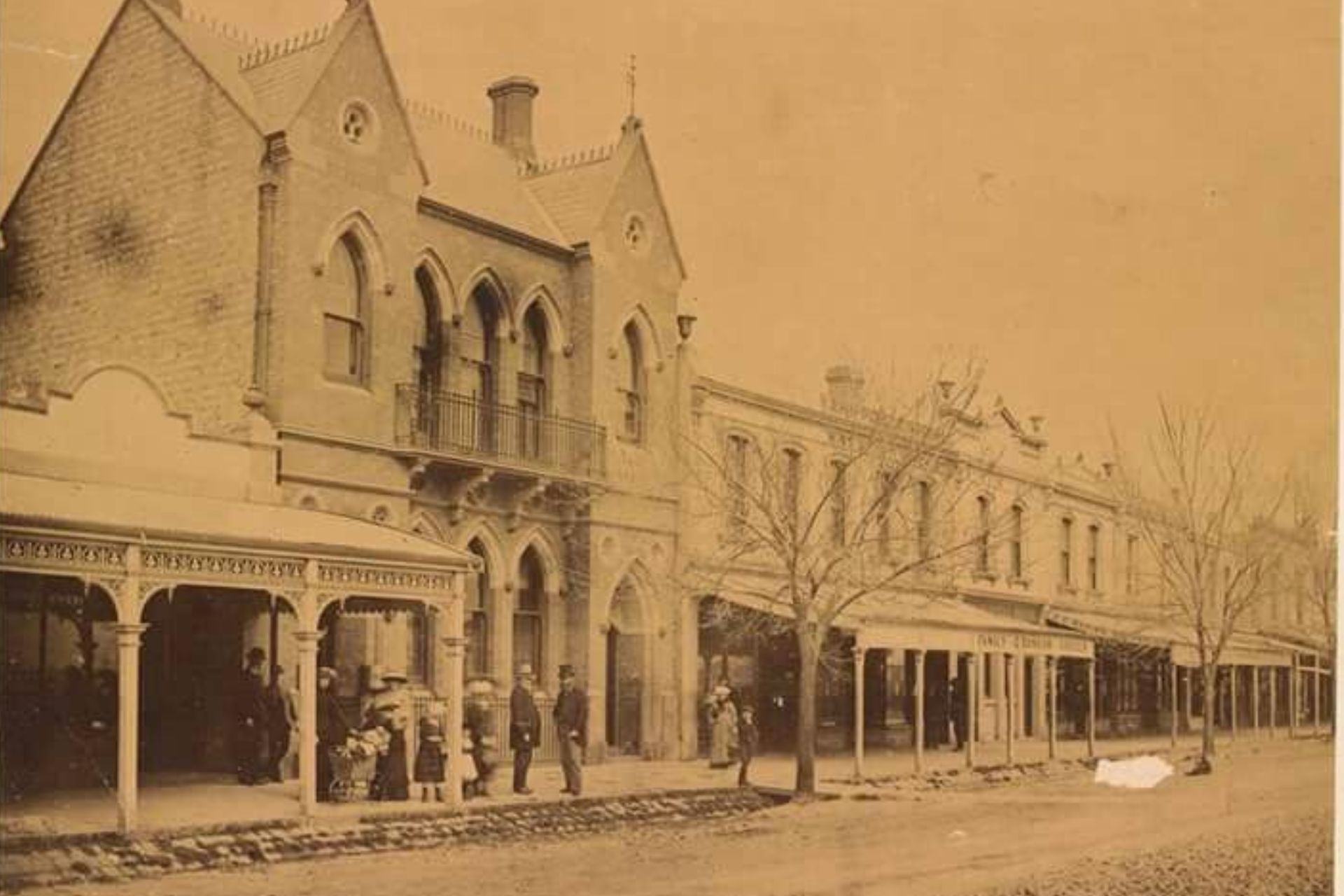
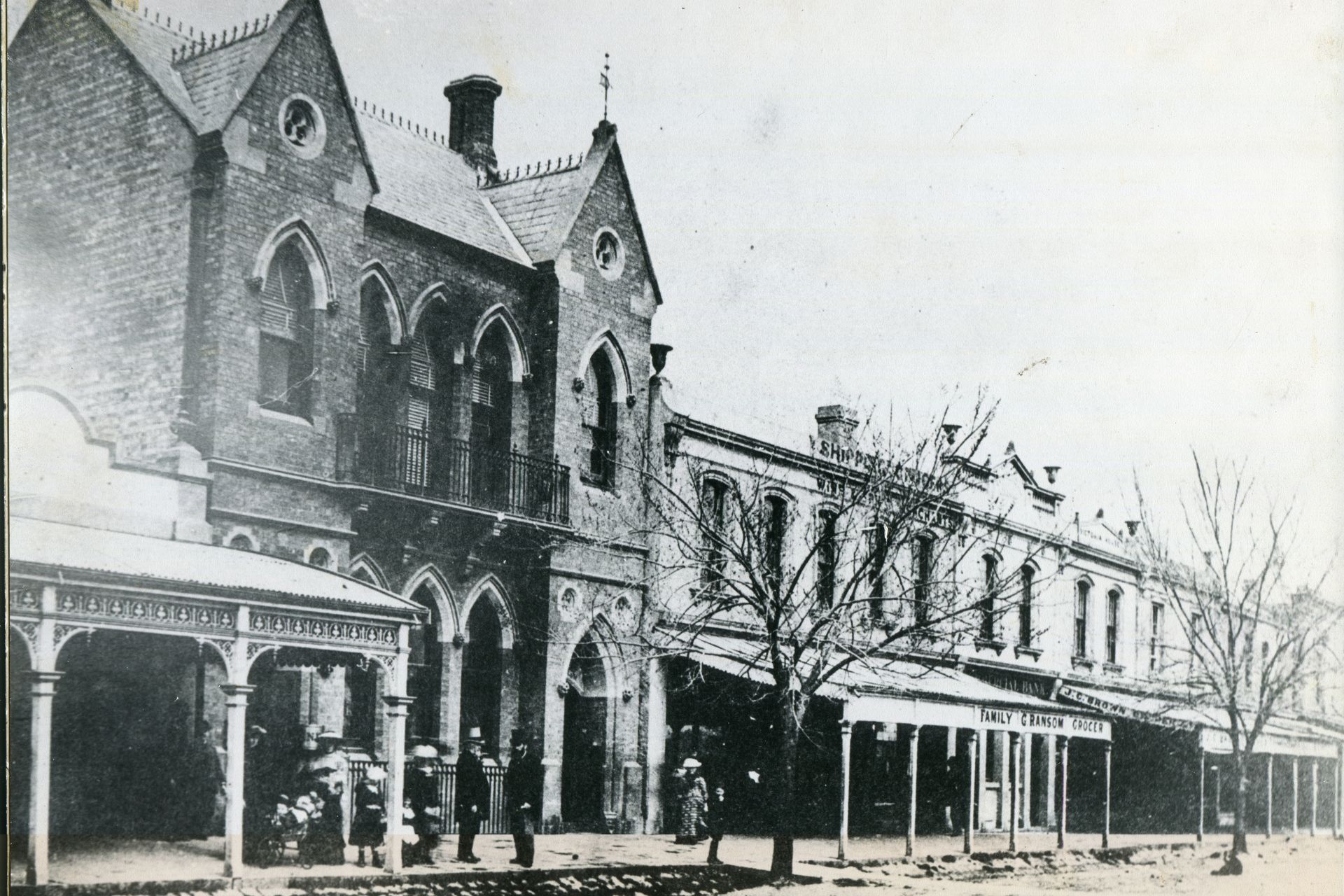
Boarded up since 2018 and requiring further restoration, the future of the Mechanics’ Institute is yet to be determined. The talk focussed on the history of this grand building, erected in stages between 1860 and 1890 and it's signifcance to the community.
This presentation was very well received by members, guests and community representatives, all united in their focus, eager to see some progress made on restoration of this historic building.
Thanks to Russell for an information and engaging presentation.
November 2025
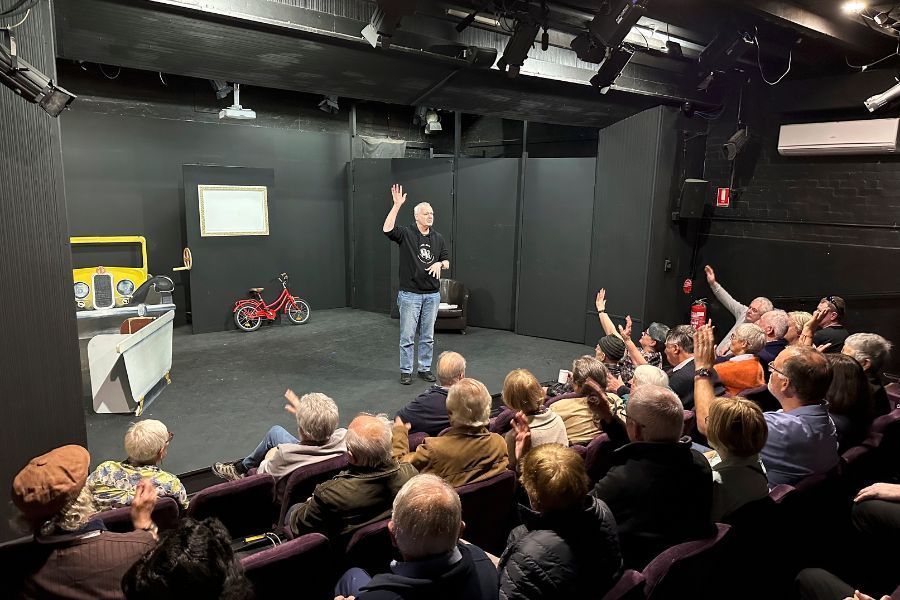
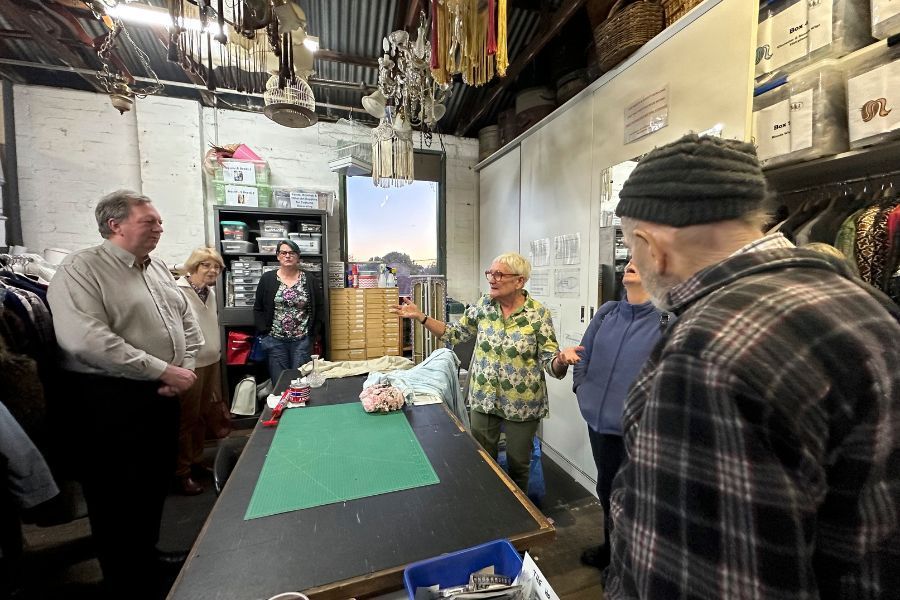
Acts of Time: Back stage at the Williamstown Little Theatre: Hosted by Peter, Barbara, Brian, Alex, Roger and Ian.
Founded in 1946 by nine local theatre enthusiasts, Williamstown Little Theatre began at the Williamstown Mechanics’ Institute with the aim of promoting locally produced drama. Today, it is one of Australia’s oldest continuously operating amateur theatre companies, staging five productions each year. Its program spans a diverse repertoire, from classic works to contemporary theatre, with a strong emphasis on Australian plays.
In 1967, a forward-thinking committee purchased a former bakery and converted it into a dedicated theatre space. With seating for audiences of more than 60, each production is typically performed over 14 times to sell-out crowds, with season tickets often secured well in advance.
Our members were treated to a backstage tour, offering an exclusive behind-the-scenes look at the production space, set construction, extensive costume and props departments, and sound and lighting facilities. Each production represents a remarkable investment of time, skill, and dedication by a large team of volunteers.
Our sincere thanks go to the Williamstown Little Theatre Committee and volunteers for hosting the evening, particularly Peter Newling (President), Barbara Hughes (Secretary), Brian Christopher (Treasurer), Alex Begg (Set Coordinator), Roger Forsey (IT), and our own member Ian Miller for organising this memorable event as our final gathering and Christmas celebration of the year.
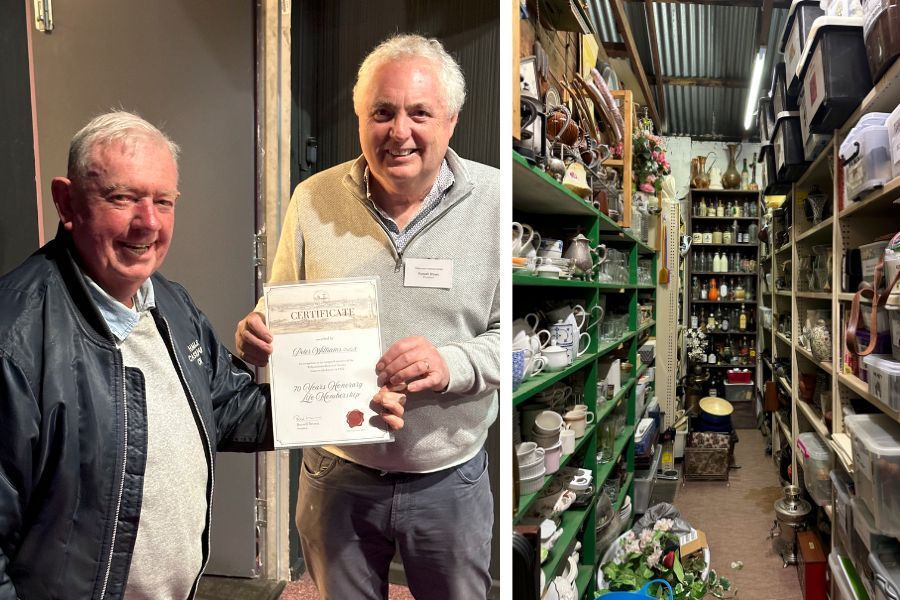
During the evening, our President, Russell Brown, presented an Honorary Life Membership to long-time member Peter Williams O.A.M. Peter has been a member since the Society’s establishment in 1956 and will mark 70 years of service next year.
Members enjoyed drinks and supper to conclude a successful evening and to celebrate a productive and rewarding year for the Williamstown Historical Society.
September 2025
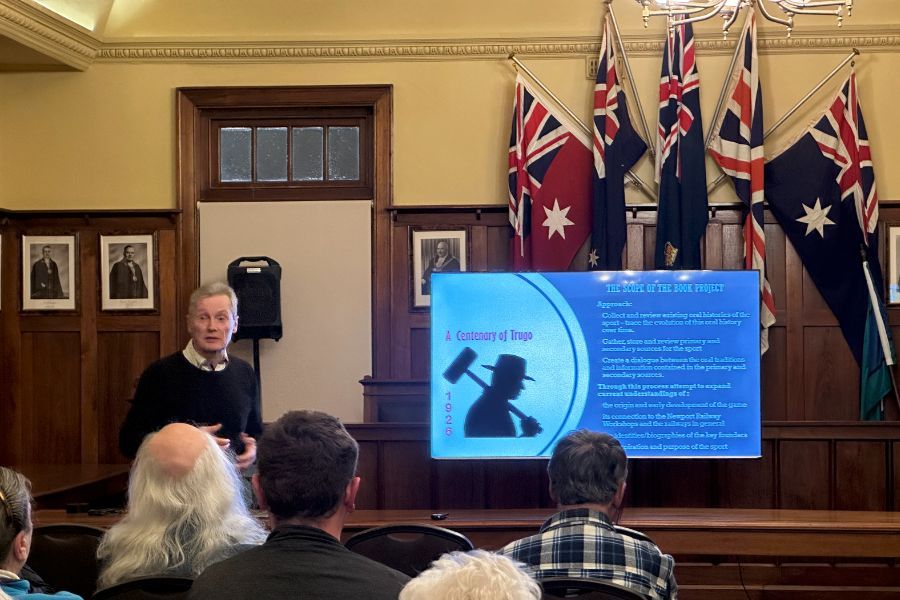
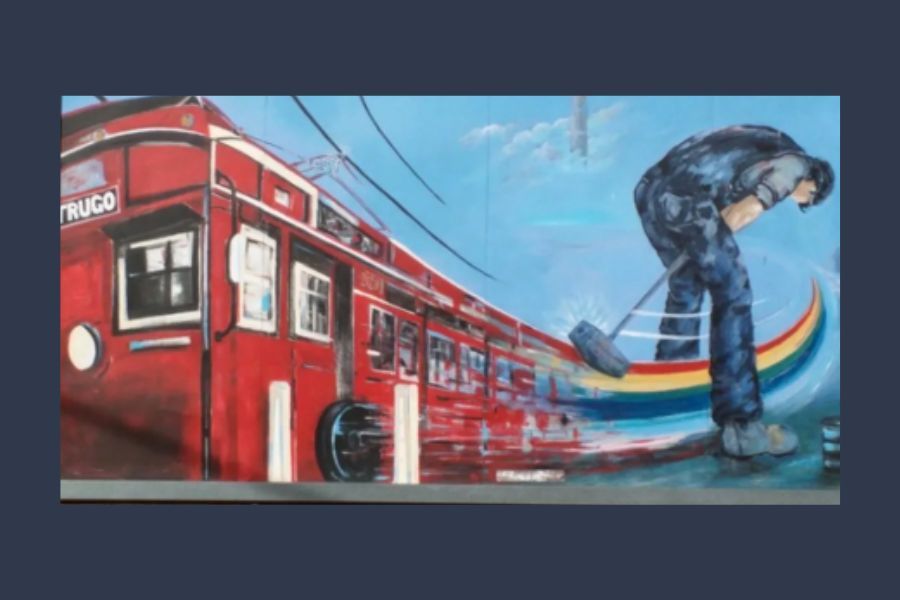
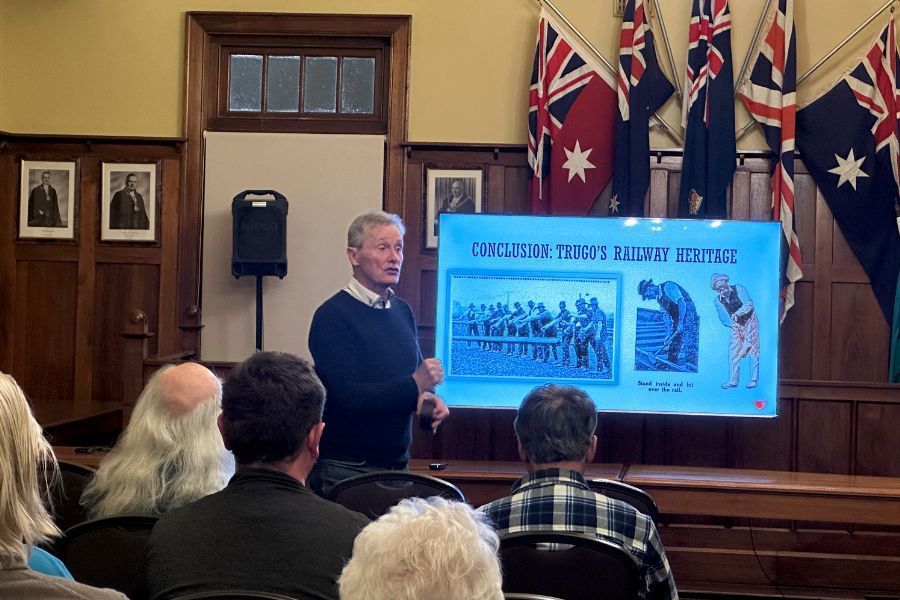
History Presentation: Trugo - Born on the Tracks, presented by Paul Thomas, President of the Victorian Trugo Association.
Trugo is a distinctive Australian sport that emerged in the 1920s within the working-class Western suburbs of Melbourne. It is believed to have been created by railway workers at the Newport Railway Workshops, who used discarded rubber buffer rings from train carriages and sledgehammers to 'whack' them down a court measuring some 90 feet, providing entertainment during their breaks.
Paul delivered an enlightening presentation about the game's history, the style of play, and has finally confirmed its origins at the Newport Railway Workshops, even pinpointing the exact source of the 'buffer rings.' Thank you for sharing your research and enthusiasm for the sport with us.
Historical records suggest a Williamstown Club was established near the Williamstown North Railway Station, though no photographs have surfaced thus far. We are currently reaching out to members, friends, and families—if anyone possesses any old photos of the game being played, we would be thrilled to make copies.
Hume & Hovell expedition termination point - History presentation - May 2025
Presented by Lance Pritchard
Did the explorers Hume and Hovell pass through Hobson's Bay and take bearings at Point Gellibrand in 1824?
Lance gave an interesting and informative talk to approximately 40 – 50 society members. His presentation outlined the arguments set out in his book to show that the Hume & Hovell overland expedition of 1824-25 terminated and turned around at the mouth of the Werribee River, and not Geelong as previously believed.
Interestingly, for us, Lance also believes that the expedition passed back through the Point Gellibrand area on their return journey north.
After many questions on the topic, the evening concluded with supper.
Thanks, Lance for your engaging presentation
Australian Heritage Festival - Lost + Found. Hobsons Bay's Rescued History - Exhibition @ The Library - May 2025
The Williamstown Historical Society began collecting historical objects, photographs, and documents in the 1950s to preserve Williamstown, Spotswood, and Newport's history. As Melbourne's original port, Williamstown significantly influenced the city’s development. Most items would have been lost without the Society's protection. The exhibition at the Williamstown Library Heritage Room showcased our unique history and highlighted the ongoing vital preservation work being undertaken.
Australian Heritage Festival - The forgotten history of Thompson St - Walking Tours - May 2025
Did you realise that Thompson Street used to be the town's main street? Russell, the President of the Historical Society, offered free walking tours of Thompson Street, revealing its rich history as the primary thoroughfare during 19th-century Williamstown. This broad, tree-lined street bears only the ghosts of the buildings you'd expect in a lively town – including a police station, courthouse, municipal offices, and more. Photographs and stories are all that remain from a time when Thompson Street once played a staring role.
Female convicts on the floating prison hulks - History presentation - March 2025
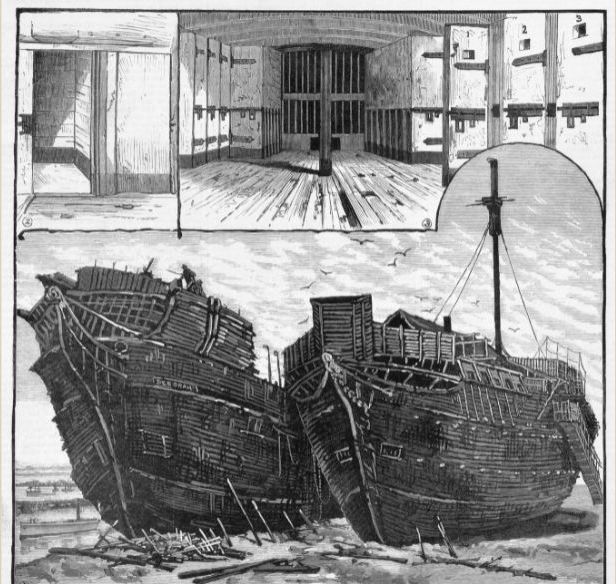
Presented by Brian Haynes
Our history books are full of stories about Point Gellibrand's floating prison hulks from the 1850s and 1860s. Sadly, these accounts barely mention the female prisoners who were also incarcerated for over 11 years aboard the hulks.
Our resident historian, Brian Haynes—though perhaps I should call him Prisoner 182, Thomas Haynes—dressed in full costume complete with genuine leg irons, revealed captivating personal stories and the crimes of nearly 1,500 women and children held aboard the prison hulks "Sacremento" and "Success." The audience was drawn into tales of individuals who often faced multiple charges, including vagrancy, drunkenness, and indecency. For many repeat offenders, a stay on the hulks in the bay offered not only a safe place to sleep but also the assurance of daily meals.
Thank you, Brian (aka Prisoner 182 - Thomas Haynes), for sharing your extensive research and illuminating the experiences of the female convicts on the prison hulks. We eagerly await the opportunity to read the full account in your upcoming book.
Robert Ellery & the Point Gellibrand Astronomy Observatory - History Presentation - January 2025
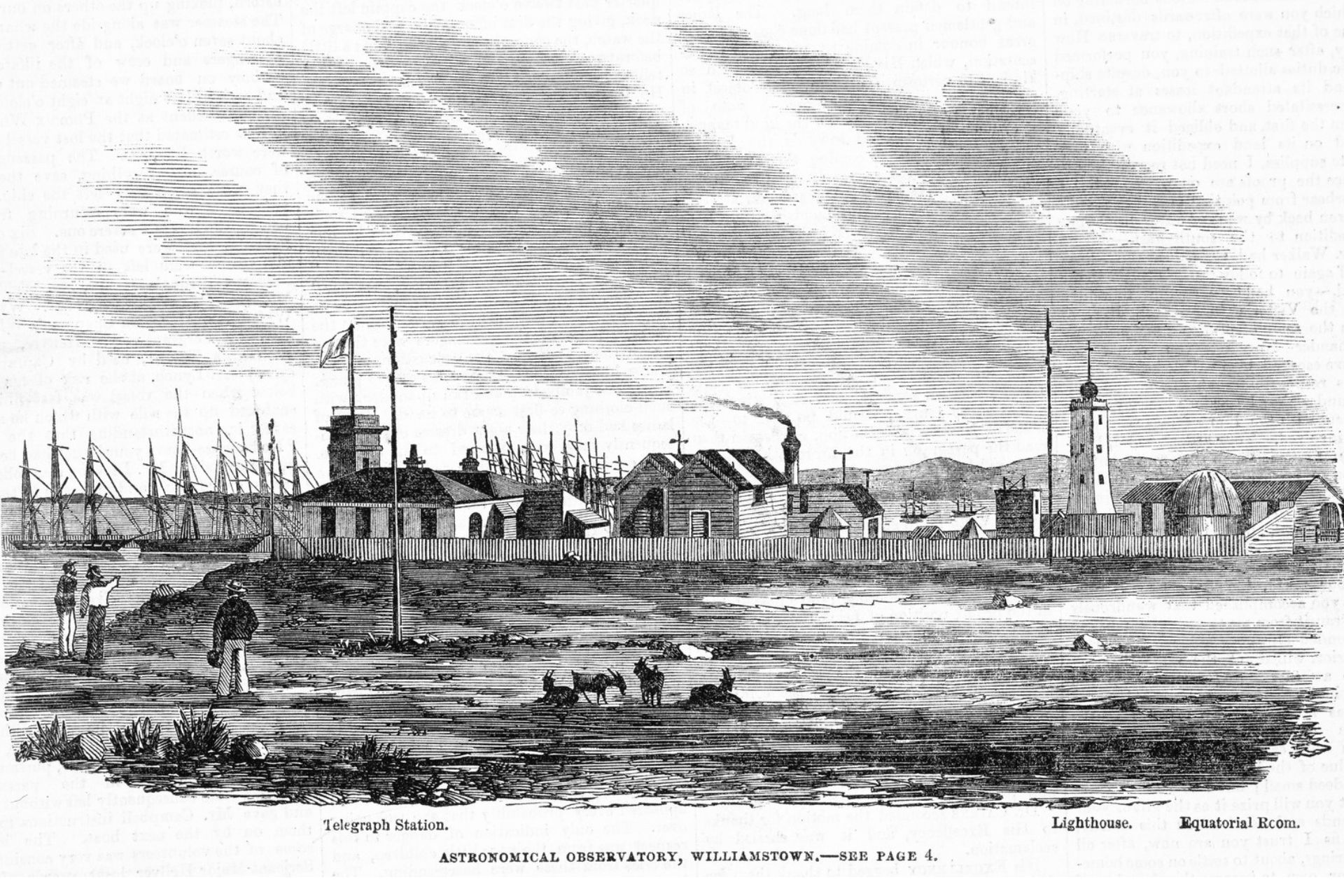
Presented by: Tony Vowles
Kicking off this year's History Presentations, our guest speaker Tony Vowels delivered an intriguing talk to members and friends about the Point Gellibrand Astronomy Observatory and the extraordinary contributions of the dedicated astronomer Robert Ellery. Among the most significant yet often overlooked stories in Williamstown's history is the groundbreaking scientific research conducted at Gellibrand Point from 1853 to 1863 by Robert Ellery, who went on to serve as the Government Astronomer for the colony of Victoria—one of many notable milestones in his lifetime. Tony's presentation certainly shed light on a topic that many members were unfamiliar with, sparking numerous discussions, questions, and a renewed interest in this vital but neglected chapter of our history.
Thank you, Tony, for sharing your enthusiasm, expertise, and extensive research on Robert Ellery with our audience. We eagerly anticipate the next phase of your efforts to ensure Robert Ellery receives the local recognition he undeniably merits.
Blunts Boatyard - Members Visit - November 2024
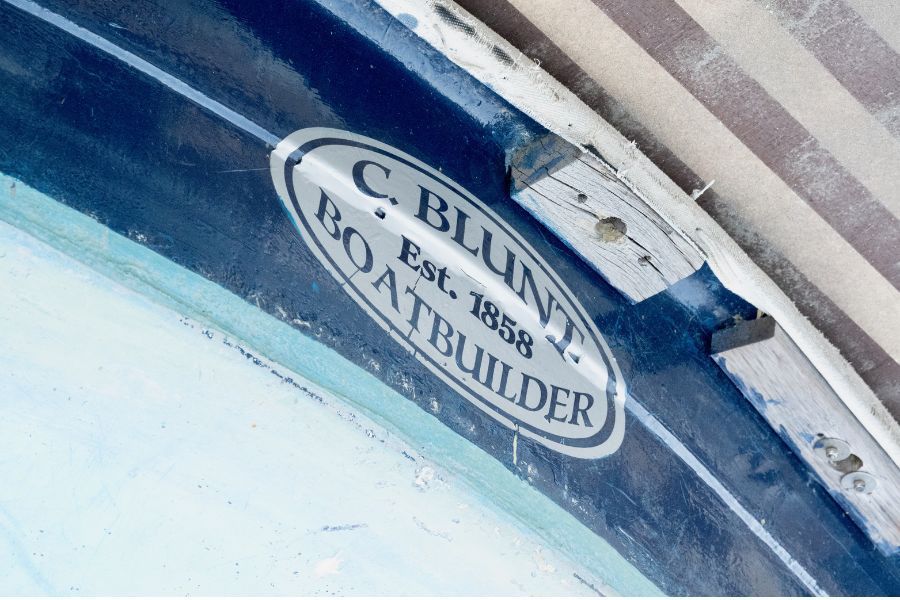
C. Blunt Boatbuilders Yard Visit - hosted by Greg Blunt in his historic workshop.
Our final gathering for 2024 unfolded on a balmy November evening on Nelson Place, where over 30 members came together. Entering through the small wooden door of this historic boatshed feels like stepping into a bygone era, with tools of the trade tucked away in every corner and the aroma of freshly cut timber filling the air. Greg Blunt regaled us with tales from his family's legacy as fifth-generation boatbuilders, and members were fortunate to wander through and discover the boatyard. It's remarkable to consider that C. Blunt Boatbuilders in Williamstown and Geelong have been crafting wooden boats in Port Phillip Bay for an impressive 150 years—a true testament to their craftsmanship and the timeless trade being passed down to future generations.
Following the visit to Blunt's, we indulged in a delicious supper, graciously hosted by Maurice Boyd at the Pirates Tavern. A lovely evening and a wonderful way to conclude a successful year.
Thanks to Greg Blunt for graciously hosting this event and Maurice Boyd @ Pirates Tavern for providing supper.
The story of Newport Lakes - History presentation - September 2024
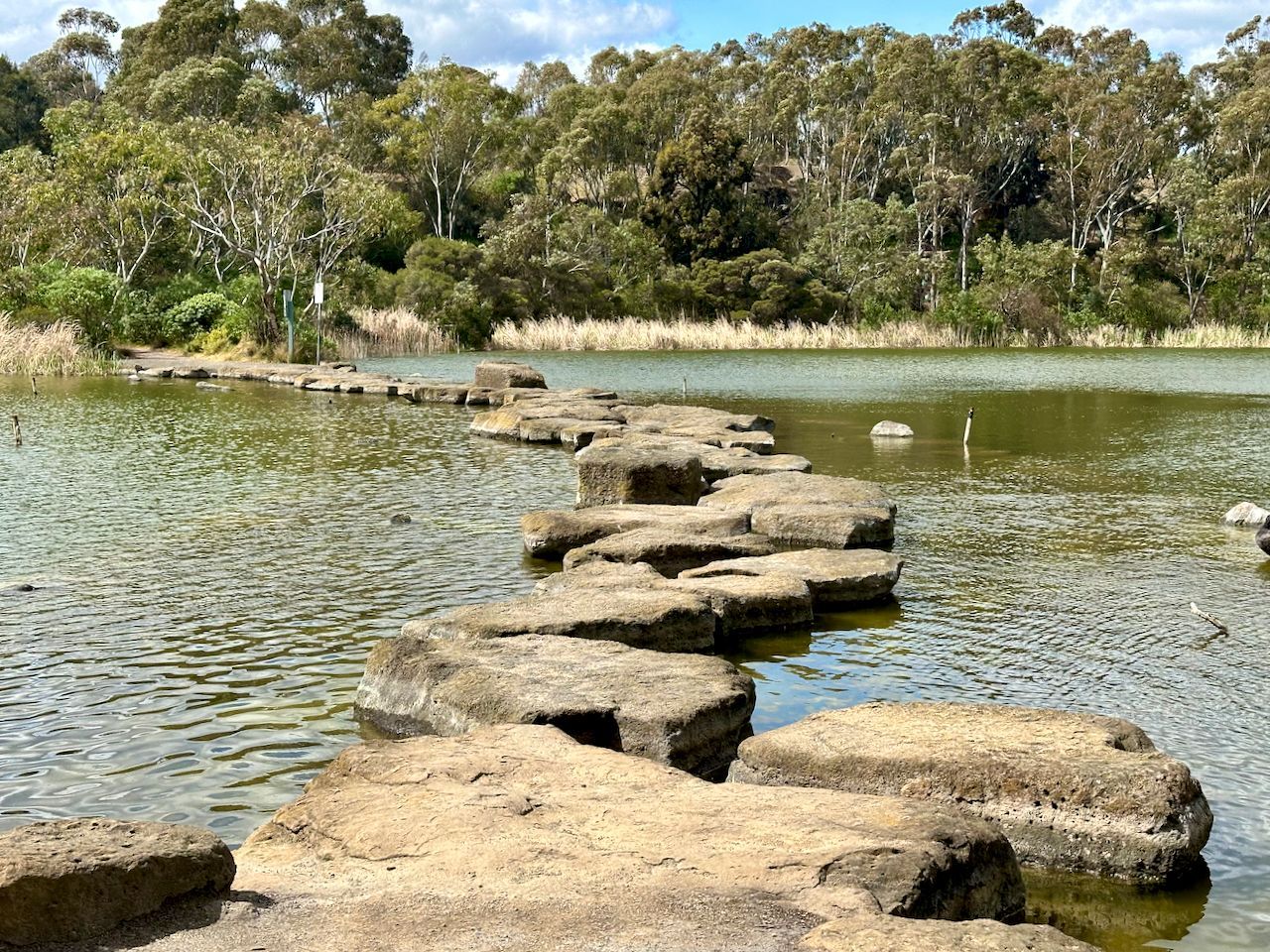
There was a great community turnout for this presentation. Thanks to our guest speakers, Dr Dominique Hes and Dr Lorraine Harrison, for an insight into the history and development of the old Newport Quarries. The Friends of Newport Lakes Inc. community group, in cooperation with Hobsons Bay City Council, has worked tirelessly over many years to transform a 'hole in the ground' into the lush green parklands and thriving native bushland that the community enjoys today at Newport Lakes. Dr Hes's book on the Story of Newport Lakes has now been published. Thanks for sharing your passion for 'the lakes' with our members and guests.
South Williamstown - History Walk - June 2024
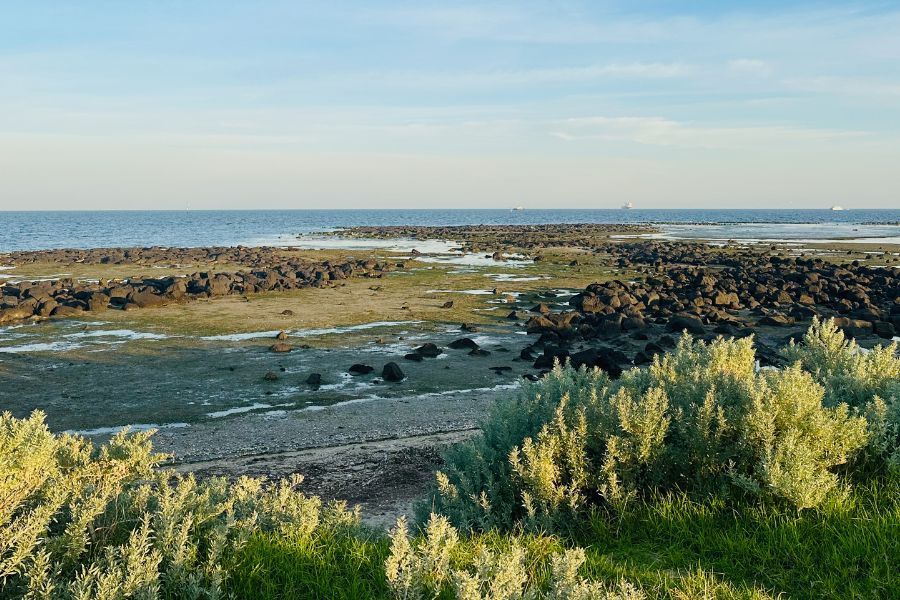
Members and a few additional guests were treated to a tour of South Williamstown with Brian Haynes on a chilly Saturday morning in early June. Brian entertained the group with stories of the area's first residents and early buildings.
Brian, thanks once again for sharing your passion for our local history.
The Geology of Williamstown & its surrounds - History Presentation - May 2024
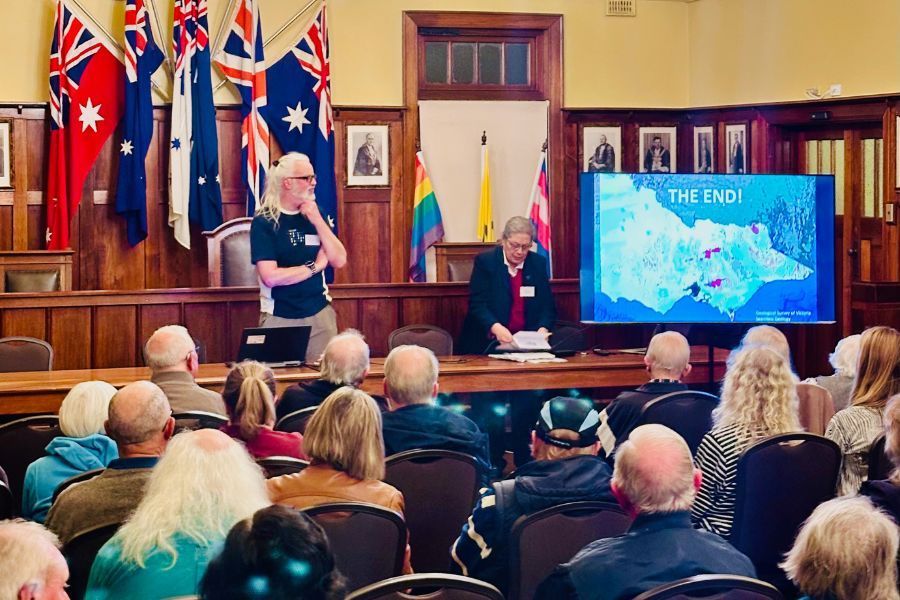
Presented by Ross Cayley
On Thursday evening, Ross Cayley, (Senior Geologist with DEECA), delivered a fascinating presentation on the Geology of Williamstown and its surrounding areas. The event attracted a diverse and engaged audience, including members and curious visitors, who gathered at the Williamstown Town Hall to uncover the region’s ancient history. Ross masterfully told how the area's landscape was shaped by tectonic plate movement, a mini Ice Age and ancient volcanic eruptions, with the resulting lava flows sculpting the peninsula and altering the original course of rivers. He explained the different types of rock formations that serve as historical markers of geological events, focusing on the distinctive basalt present in the area. With recent earthquakes in Victoria drawing increased public interest, he also discussed seismic activity, how and why earthquakes occur, pinpointing the fault lines and how they are measured and mapped.
Armed with a deeper understanding of the landscape and what may lie beneath their feet, many in the audience agreed that when on their next walk or venturing further afield, they would be inclined to pause and take a closer look at their natural surroundings with a new appreciation of how it came to be.
Ross - thank you for your time, and for sharing your knowledge and passion for geology with everyone who attended this community event.
Signatures from the Front - Event - April 2024
Find out morePresented by: Jenni Moloney
This showcase event at the Williamstown Town Hall, held during Heritage Month, was the first time our World War One Signature Quilt was displayed in six years. Jenni Moloney presented her extensive research into one of the treasures in our collection and the individual stories behind the signatures. The quilt pays tribute to the memories of many courageous individuals who fought overseas during World War I, including those who lost their lives while fighting for their country and never returned home.
Thanks, Jennie, for your investigative research in finally finding the true story of the quilts' creation and sharing it with everyone.
Steamrail Victoria Open Weekend - Newport Railway Workshops - Event - March 2024
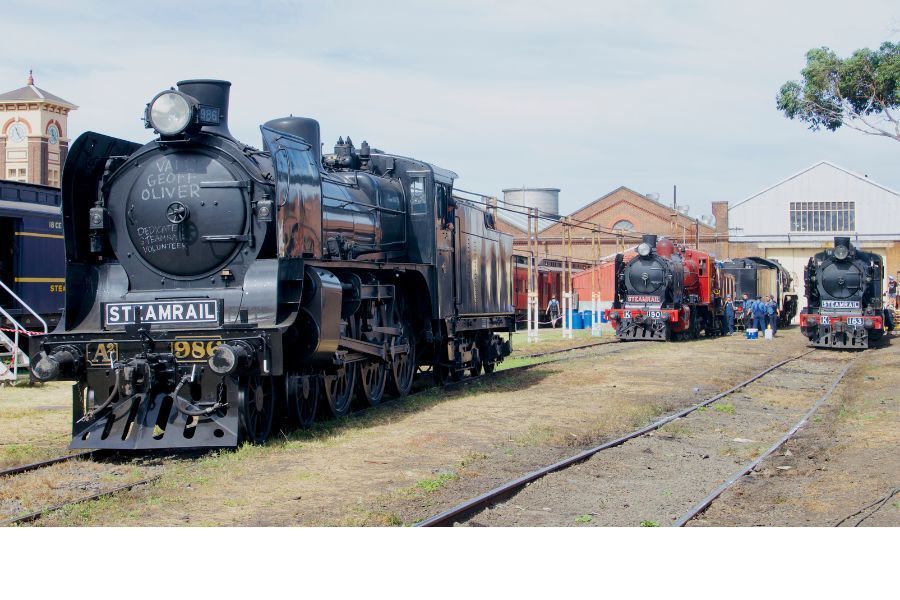
We were thrilled to have a display at this highly anticipated and well-attended event. Once every two years, rail enthusiasts from far and wide converge on the historic Newport Workshops for one of the largest and most impressive displays of rail history in the country.
The Newport Railway Workshops have been in operation continuously since 1870 and are typically not open to the public. The historic railway sheds have seen it all, from the construction of the early steam engines to the steady evolution of transportation technology and the diesel locomotives of today.
Despite the extremely hot weather conditions across all three days, crowds of all ages arrived early to make the most of this rare opportunity to explore the extensive workshops, collection of engines, carriages, and models on display, as well as to watch demonstrations that brought the history of rail transportation to life.
Volunteers manned our stand and promoted the local area heritage and tourism to visitors with much interest taken in our display including historic photographs.
Thanks to everyone who helped out.
Williamstown Cemetery - History Walk - March 2024
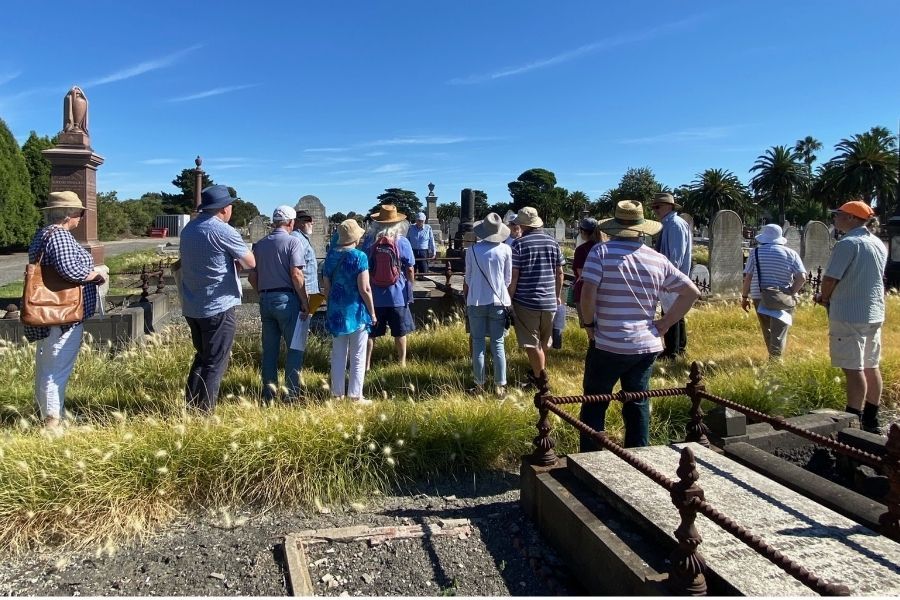
Presented by Brian Haynes
Brian Haynes shared his expertise as a local historian with our group on a beautiful Sunday morning, with a walking tour of the historic Williamstown Cemetery. Members learnt about its' colourful characters' and tales of early life in the colony.
Describe the item or answer the question so that site visitors who are interested get more information. You can emphasize this text with bullets, italics or bold, and add links.
The Buckingham Car - History Presentation - March 2024
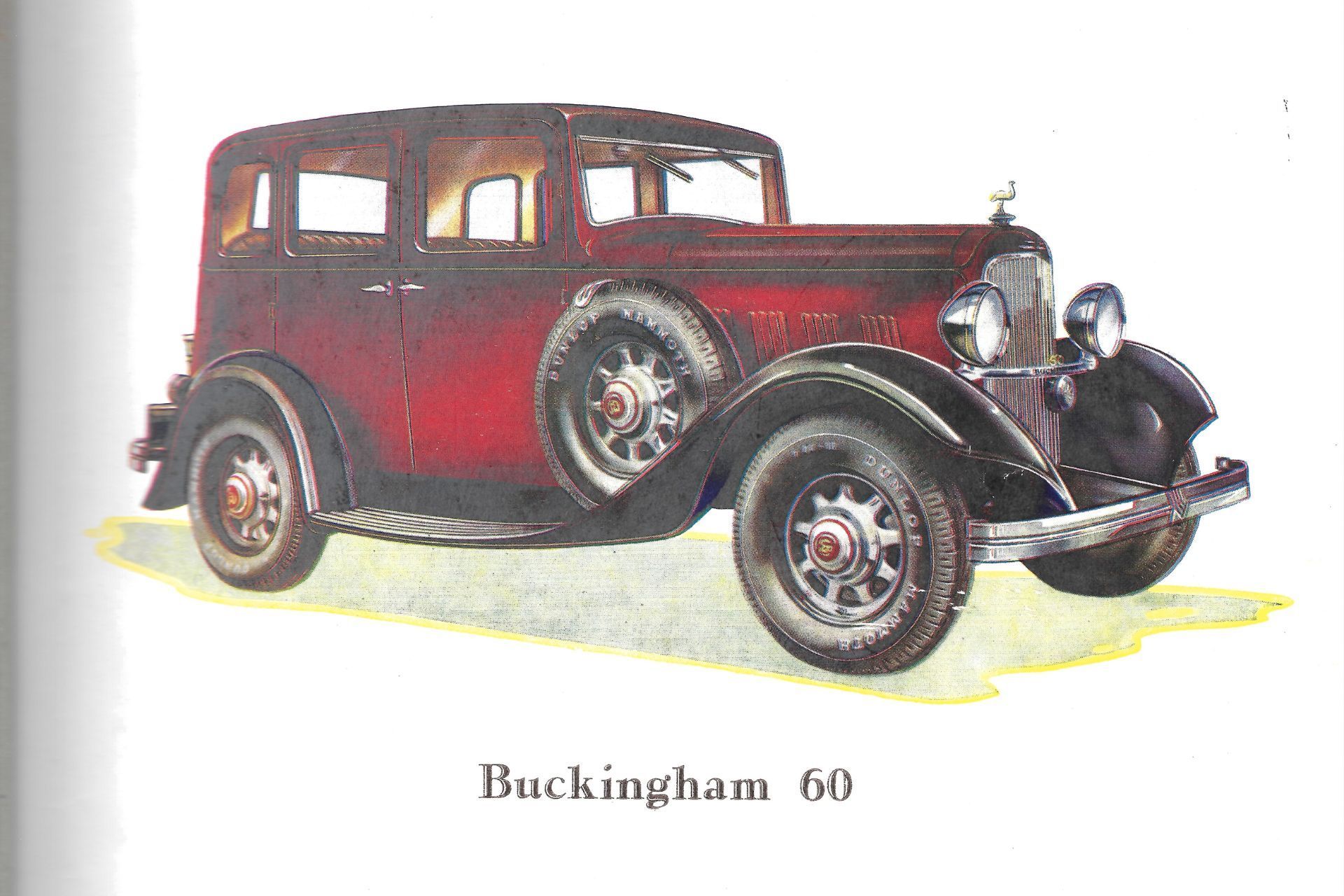
Presented by Scott Garnett
Did you know that there was a locally produced car, manufactured in Footscray in the 1930's? Scott entertained the audience with the pioneering vision and achievements of John Thomas Buckingham & Alfred Thomas Ward. They successfully manufactured a locally built motor car from the engine block up, at a time when the major players in the automotive market (Ford & Holden) were importing car components and only assembling cars in Australia.
Scott, thanks for sharing your passion and research with us.
On the Beach - History Walk - January 2024
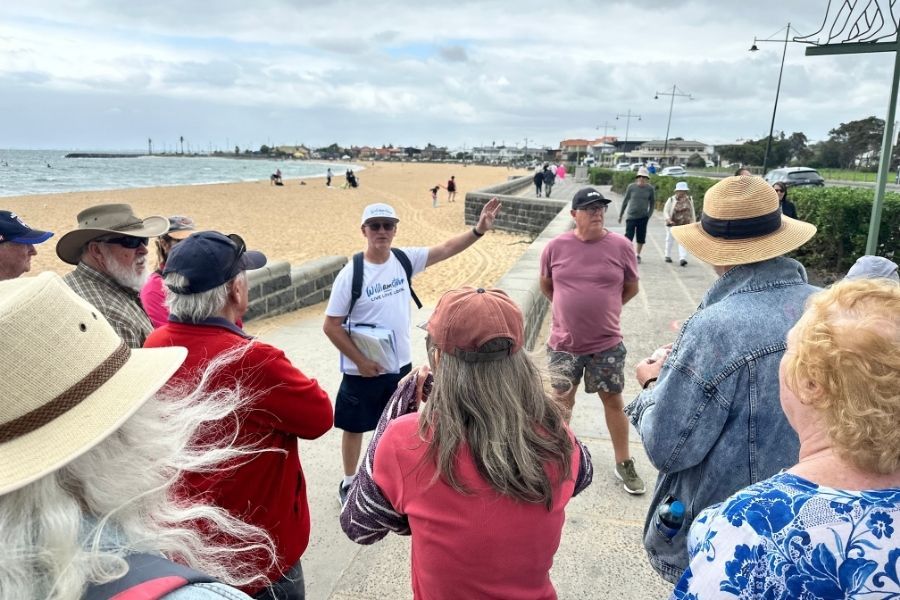
Presented by Brian Haynes
Our members had the pleasure of a fascinating Sunday morning history walk, guided by Brian Haynes, a WHS life member and well-known local identity. Brian has a deep passion for sharing his amazing knowledge of the area’s history with others, including his almost 10,000 members on the Williamstown Past and Present Facebook Group.
Our group gathered near the Morris St football ground and under Brian's guidance, embarked on a stroll along the foreshore, befriending a lost dog along the way. Brian shared some surprising facts about the area's past. He revealed that living along the Esplanade in the early days was not a pleasant experience, as the now expansive grassed area was once a rubbish heap, filled with rats and emitting an unpleasant stench in the air.
As the group meandered along the undulating path near the water, Brian pointed out the remnants of the bluestone quarries that were excavated by convicts. Some of the cuts and drill holes are still visible today, half hidden by the creeping vegetation. The basalt extracted was used in the construction of our early buildings and infrastructure.
We learnt about ‘The Bunbury swimming hole’, old Sea Baths that graced the shore and the carnival ground with a carousel. These treasures were from a time when thousands of visitors arrived by steam train to enjoy a stroll along the promenade, a paddle in the ocean or perhaps a picnic in the Botanic Gardens.
Brian, thanks for sharing your passion for history and bringing it to life.
St Johns Ambulance - Museum Visit - November 2023
Our last gathering of the year was a trip to the St John's Ambulance Museum on the Esplanade in Williamstown.
We had a presentation on their collections and some time to look at the exhibits before we caught up over refreshments. This museum is a small but hidden treasure, and visiting it is worth it if you're interested in the services that St John's Ambulance has provided over the years.
Thanks to the St John's Ambulance Museum for opening their doors to us and sharing their wonderful collection.
Newport Railway Workshops Clocktower Restoration - History Presentation - September 2023
Presented by Ralph & Virginia Coghill
At our September presentation, guest speakers Ralph and Virginia Coghill entertained the group with their team's heritage restoration work of the Newport Railway Workshops Clocktower and Gardens. After overcoming hurdles and getting Hobsons Bay Council and Victrack onside with their restoration skills and ideas their team has done a wonderful job.
Thanks to Virginia and Ralph for sharing the story of your team's hard work.
Do you have a story to tell?
Do you or a family member have a fascinating story to tell about a significant person, family, event, or location related to the communities of Williamstown, Newport, or Spotswood?
Make this year the year you share your history.
Get in touch and share your story with our community.
Blogs