Williamstown Notable - James Henry Fearon
Beyond the Reserve - Who was James Henry Fearon?
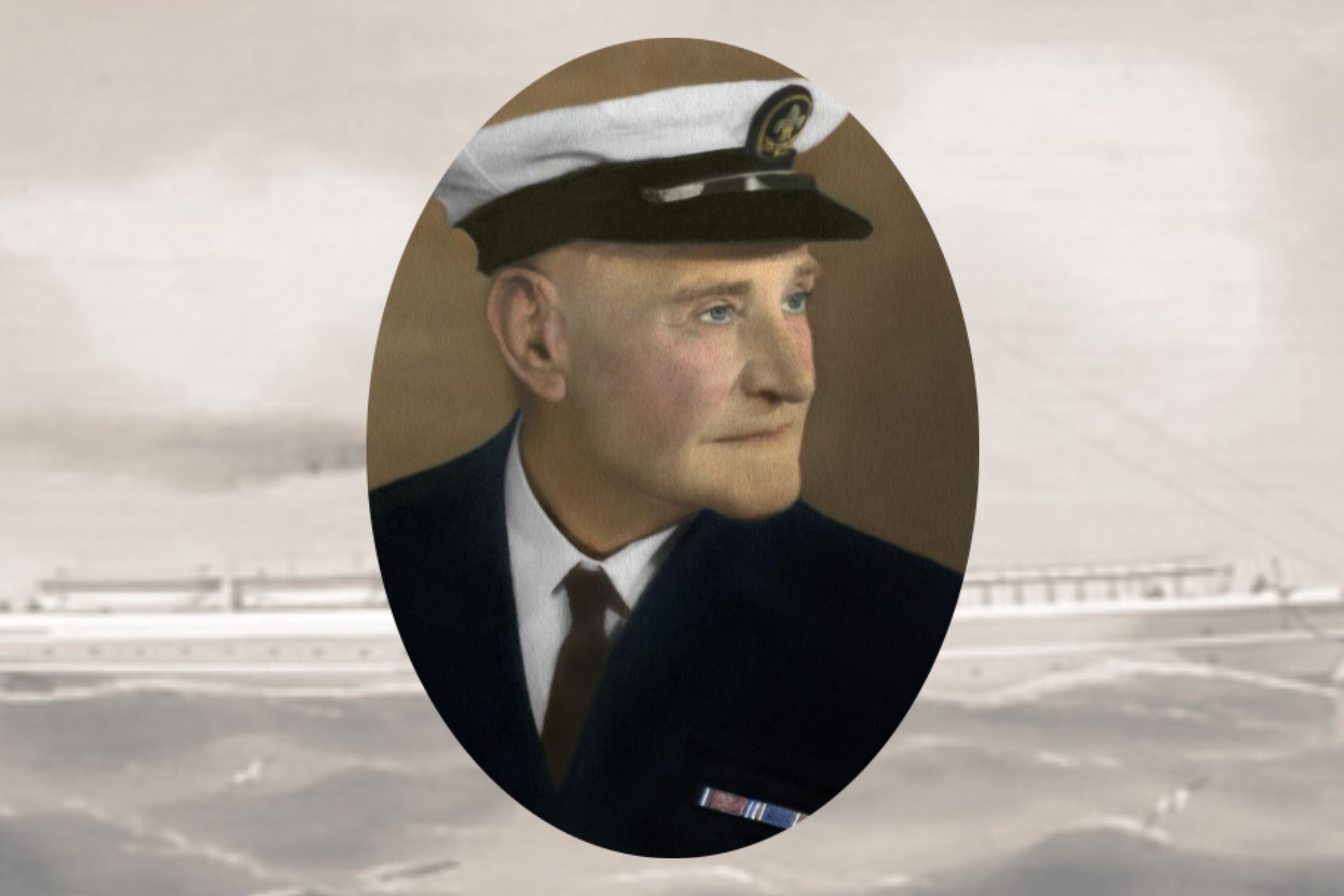
James Henry Fearon (1863-1944) was born in Williamstown, Victoria, on 19 July 1863. He was the fifth of six children to Daniel Fearon (1826-1873) and his wife Mary (nee Riley) (c.1826-1893), who were originally from Liverpool.
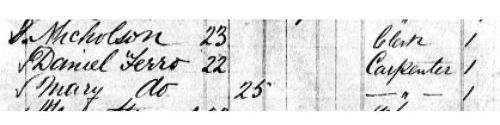
His parents, Daniel & Mary Fearon, arrived in Adelaide on board the ship Martin Luther in March 1852. Daniel’s occupation was listed as a ‘Carpenter’ and their surname ‘Ferro’.
His parents, Daniel & Mary Fearon, arrived in Adelaide on board the ship Martin Luther in March 1852. Daniel’s occupation was listed as a ‘Carpenter’ and their surname ‘Ferro’.
The couple then moved to Victoria, settling in Stafford Place, Williamstown and Daniel became a Shipwright. The couple went on to have six children: Daniel Fearon born in 1853 in Adelaide, who became a Tug captain and was in command of the tug Racer; Alfred Fearon born in 1856 in Williamstown; John Fearon born in 1858 in Williamstown; Mary Ann Fearon born in 1860 in Williamstown; James Henry Fearon born in 1863 in Williamstown; and Catherine Jane Fearon born in 1866 in Williamstown. On their deaths, both Daniel and Mary were buried in Williamstown Cemetery.
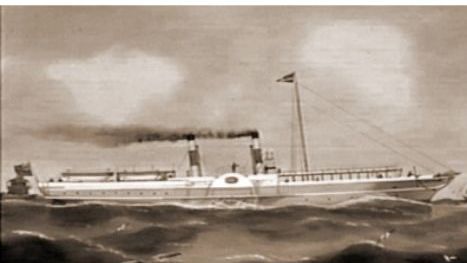
James Henry Fearon started his working life in the employ of the Melbourne S.S. Co., better known as the Melbourne Coal, Shipping and Engineering Company. He then worked for a period in coastal shipping before joining the bay excursion paddle steamer PS William (left) as a mate, later transferring to the Port Phillip tug trade.
He then obtained his licence as a harbour pilot in 1901, working on the harbour and river, retiring as a Pilot in July 1928, after 27 years. He then became the pilot’s representative on the Marine Board from 1932 to 1942.
During his 28 years in the pilot service, the ‘Captain’ as he was affectionately known, handled 7950 ships of all shapes and sizes from all parts of the globe.
He was quoted in the Daily Commercial News and Shipping List of 25 July, 1928, relating to his retirement:
“I attribute my success to the remarkable efficiency of the Melbourne tug-masters. Skippers of these tugs perform almost impossible feats of navigation every day. Faced with cruel winds and sometimes a strong, fresh running in the river, they display skill and initiative which has prompted many masters of various nationalities to tell me that Port Phillip has the best tug masters in the world.”
He never married and had the time to be heavily involved in a variety of sporting activities. At one time or another was President of the Victorian Football Association's Second Eighteens, the Williamstown Lacrosse Club for over 40 years, the Victorian Lacrosse Association and the Williamstown Swimming and Life Saving Club.
Captain Fearon was President of the Williamstown Lacrosse Club for over 40 years, a position he still held at the time of his death. He kept the Williamstown Lacrosse Club running, often at his own expense, in their early years. He was also a Sea Scouts Commissioner and was involved with the Williamstown Football Club and the CYs. Not long before his death, the reserve next to the Williamstown Botanic Gardens was named in his honour.
This article first published in the Williamstown Chronicle on Saturday 12 October, 1929, page 2 pays tribute to his achievements and devotion to the community sport.
ANOTHER OF OUR BEST CITIZENS.
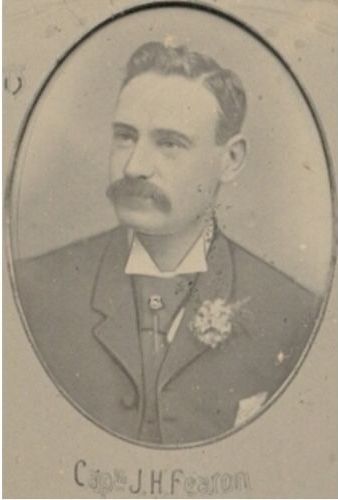
(By " Proxy.") An eminent divine, asked once to interpret "What is a gentleman"? replied, "One who never gives offence." It is believed there is no reliable record available as to what number of such rarities this city possesses, but at least there is one unassuming personality in our district who is freely recognised as being fully entitled to such a claim, and that citizen is the subject of this contribution, whose photo appears above. CAPTAIN JIMMY FEARON, as he is familiarly known in sporting, social and seafaring life.
Those interested in any form of clean sport in this district will readily acquiesce in our statement that the Captain has done his full share consistently and uninterruptedly for a whole lifetime to foster all departments of healthy outdoor games, and, incidentally, to offer every encouragement to the boys, youths and young men of his and other districts to engage in every beneficial form of athletics. His record of association with the sporting life of Williamstown is really unique.
A visit to his comfortably equipped den, "The Anchorage," in Thompson Street, reveals remarkable evidence of the part he has played for half a century in this direction. The walls of his bachelor diggings are literally covered with presentations of photos, groups and trophies from sporting institutions, which in no unmistakable manner voice the high esteem in which the Captain is regarded by a large section of the community.
A native of this city and having already passed the sixty-fifth milestone on the journey of this terrestrial sphere, it is no exaggeration to state that, for his years at least, there is no fitter or more active citizen in our midst. Notwithstanding, he has never known the taste of alcohol and has been a non-smoker all his life, the Captain attributes his "good nick" and "fit and well" condition to the fact that he has not missed on one occasion for a period of thirty-eight years his morning exercises and physical jerks.
In a brief conversation, one elicits the fact that the Captain's favourite sport is lacrosse, though he does not commit himself so. What he has done for this game few people have the remotest idea. In 1897, a coterie of young men held a meeting in the Baptist Hall, in Cecil Street, and here it was that lacrosse had its birth in Williamstown. Mr. ''Tommy" Henderson was the first president, and the late Mr Henry Hick was elected the second year. Captain Fearon was elected for the succeeding term and has been president continuously for a period of thirty years.
There are seven lacrosse teams in Williamstown, six of which finished in the finals this season. About 120 young athletes locally are closely associated with the game, and their president is very proud of them; to use his own vocabulary, "They are a splendid type of athlete, and first-class exponents of the sport." Established by the Captain also are the "Wanderers," two teams of boys 15 years and under. There are fifty boys in all, and he pays a special tribute to Mr. Geo. Bowman, who has charge of these juniors. He is unstinted in his praise of the enthusiasm and self-sacrificing work of, as he. puts it, "My friend, Geo. Bowman."
A graceful reference he makes also to the well-known Hick family. Since the introduction of lacrosse to Williamstown, there has always been at least one of the Hicks associated with the sport, and it is alleged that no one ever did more for the game than the late Bert Hick of happy memory, to which the Captain subscribes.
A feat worth recording is that, in this season alone, Captain Fearon has umpired in forty-two lacrosse matches - not a bad effort for 65 years. He has accompanied every lacrosse team which has left Victoria to engage in all Interstate competitions, one of which was just recently undertaken to Western Australia.
In 1910, under the Captain's guidance, the local boys visited N.E. Victoria and played an exhibition game at Nagambie. The trip was a huge success, and Nagambie formed a club right away, and made our genial "Jimmy" its first president. In his home today may be seen a fine token of esteem from the Goulburn Valley organisation. So rapidly did the Nagambie club improve, that shortly afterwards their president invited them to Williamstown to try conclusions locally. The Captain personally met the visitors at Spencer Street on arrival, and escorted them to Williamstown, via Port Melbourne. The irony of the whole thing is that the country team accounted for one of the best teams the locals could put on the field. At a convivial gathering later on in the day, one of the visiting team jokingly suggested that "it was not quite the act of a good sport like the Captain to bring the "Hayseeds" across in the bay ferry on an exceptionally rough winter's morning, in order to get the team sea-sick and overwhelm them in the lacrosse arena afterwards, an event which the local team failed to accomplish.
"Jimmy" Fearon is senior vice-president of the Victorian Lacrosse Association, chairman of the Williamstown Football Club, a delegate to the Victorian Football Association, vice-president of the Victorian Football Association, vice-president of the Victorian Junior Football Association, commodore of the Williamstown Punt Club. In 1911, Williamstown, through the instrumentality of "our subject," engaged South Yarra in an exhibition game at Geelong with a view to establishing lacrosse at the Pivot. Williamstown were successful, and a prominent Geelong businessman presented the Captain with a handsome memento of the occasion, which also adorns his library and music room.
The Captain's association with cricket dates back to 1895, when he was the president of the Orientals, who won the premiership. A handsome marble clock, given to him by the club, is further evidence of his high respect. For 19 years, the old Myrtle C.C. was under our friend's presidency. They were remarkably successful as juniors, winning in consecutive seasons the first, the second, and the third-grade competitions in which they were engaged, a feat which was not accomplished before, or since, by any junior combination in Victoria. The Myrtles afterwards became the Williamstown District Cricket Club in the Victorian Junior Association, and "Jimmy" is still at the helm and with the boys. Amongst innumerable tokens of respect in his possession is one from the Alberton Cricket Club (S.A.), which is highly prized by its owner. The appreciation by this Adelaide team of his association with them is fully demonstrated in the club's handsome gift now at his home.
Football, of course, has been another avenue of sport that has attracted his attention, but probably not so much as lacrosse. In fact, for part of one season only, he played in the centre with the old Battery Football Club. He was always in the centre, no matter where he appeared, but, as he thought, having been unfairly attacked from the rear in a match, "Jimmy" retaliated and struck his opponent on the "supramaxillary." He was afterwards, ordered to stand down by the authorities, and that was the end of his football days. He decided right away that football could not be indulged in by one whose lofty aspirations were those of one who was destined one day to be regarded by his fellow sports as "a gentleman." In 1916, 1917 and 1919, the Williams-town Junior Football Club won the premiership, and were runners-up in 1918. These performances annexed the handsome competition shield presented by Mr John Wren to the Victorian Junior Association, and as the Captain was the president of the juniors during their activities, the shield found its way to "Jimmy" Fearon's possession, and is now "on deck" with quite a large number of other mementoes to keep it company.
So much for his sporting life. The Captain is an extensive reader and is passionately fond of music, he is not an instrumentalist in music but is in possession of all the best mechanical musical contrivances money can acquire. Always attracted to the ballroom, he still has a go at the terpsichorean art. He says it "helps him to keep fit." He recalls many happy evenings at the popular dances that eventuated in the old skating rink, where he was always a familiar figure - well groomed and laundered, wavy haired, dainty nosegay, and last, but not least, the proverbial scarlet merino half-hose. "Jimmy'" had few rivals in the old rink. The best partners were his, but only for the dancing season. For some reason not yet divulged, none of his admirers of the fair sex,(and they were many) were ever able to "rope" him in, and, unlike our friend Benedick in "Much Ado' About Nothing," James elected to lead the simple life of a bachelor. It is hard to imagine such a generous and unselfish person being lost to married life, as, beyond all doubt, he would have proved himself as the ideal husband.
To the general public the Captain is known better as a harbour and river pilot, from which service he retired in July 1928, after 27 years. At that time, that ultra-conservative body, the Overseas Shipping Representatives' Association were, contrary to usual custom, pleased to refer to his work as a pilot. A flattering memo., bearing the date, 17th August, 1929, from that body is before me.
Another further testimony of his personality is from the Marine Board, who, at this period, were pleased to refer in writing to "your excellent record as a harbour pilot in the Port of Melbourne and your cordial relations at all times with the board." During his 28 years in the pilot service, the Captain handled 7950 ships of all shapes and sizes from all parts of the globe, and an extract from the "Herald" (18/7/28) states that "shipping representatives described him as the 'man who had taken thousands of ships in and out without costing the companies even the price of a small tin of paint."
Captain Fearon has much affection for the masters of the tugboats of this port, and he attributes his success as a pilot to their great skill in performing, at times, almost impossible feats of navigation. He says he was often told by masters of ships from all nations that our tug masters were the best in the world. Captain Fearon also pays a fine tribute to the deep sea pilots in Port Phillip. It is the only service in the world that is continually outside and ever ready for its work and is composed of masters who have no superiority in any other part of the globe.
And now, in conclusion, we pass on unreservedly to you, "Captain Jimmy," our heartiest and most cordial greetings on your successful journey of life. We do not know that you have even the mildest enemy, not even the footballer you struck on the "supramaxillary." May the spirit of affection, health and happiness ever attend you.
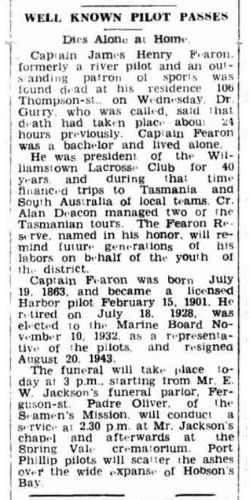
Captain James Henry Fearon passed away suddenly from a heart attack on 7 August, 1944, at his home at 106 Thompson Street. Williamstown.
Our stories